
It was in 2015, a year after he assumed the office of the Prime Minister that Narendra Modi declared November 26 as India’s Constitution Day or Samvidhan Divas, to use the correct nomenclature. The Prime Minister made this declaration on October 11, 2015, during Dr BR Ambedkar’s 125 birth anniversary. Ironically, an official notification was issued on November 19, the same year which happened to be late Indira Gandhi’s birthday. Whether this was a slip up or oversight is debatable, but given Modi’s intense hatred of the Nehru-Gandhi family, it is unlikely that the Modi government would want the date etched in the memory of the citizens of India. In fact, in this year’s Constitution Day, the prime minister slammed previous governments to weaken the Constitution, making a special mention of the Emergency and the “power hungry and anti- constitutional leadership”
Politics apart, to mark the sanctity of this day, it is important to decode different aspects of the Constitution, specifically some of its terminology, particularly constitutional morality.
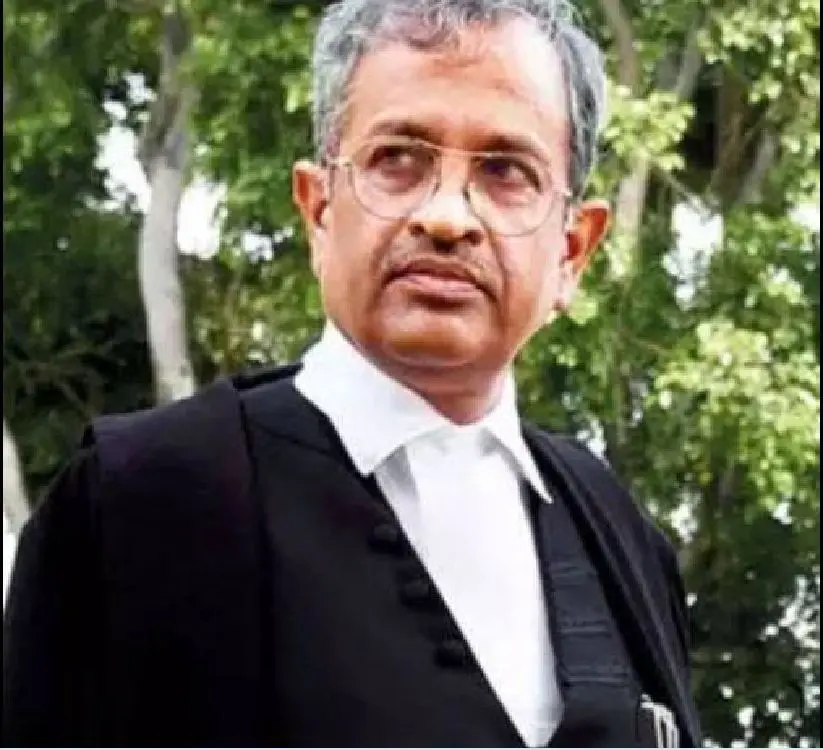
In this exclusive interview, Senior Advocate, Supreme Court, Sanjay Hegde explains the terminology and its various aspects, and more importantly, whether it is functional or a mere term in the books. Hegde is a leading voice for civil rights and an authority on constitutional law and public interest litigation. In his practice spanning three decades, he has handled matters on free speech, governance and constitutional law in the Supreme Court. Excerpts:
Kumkum Chadha (KC): What is constitutional morality?
Sanjay Hegde (SH): The phrase is older than our Republic. George Grote, the Victorian historian of Greece, coined it. He watched Athens and asked why its democracy worked when it did. His answer was a habit of mind. Citizens revered the forms of the Constitution. They obeyed authority acting within those forms. Yet, they kept the right to speak openly and to censure that same authority. Above all, each citizen trusted that his opponent would hold the Constitution as sacred as he did, even amid the bitterness of party contests. Dr Ambedkar borrowed Grote’s idea on November 4, 1948, when he moved the Draft Constitution. He warned that constitutional morality is not a natural sentiment. It has to be cultivated. He feared Indian democracy was only a top-dressing on soil that was essentially undemocratic.
So, constitutional morality is not a clause. You will not find it in the text. It is the spirit in which you work the text. A Constitution is a set of rules, and rules can be gamed. Constitutional morality is the restraint that stops you from gaming them. It is what a Governor does when no rule fixes a deadline. It is what a Speaker does when the law leaves a disqualification petition to his conscience. Ambedkar later gave the idea a second, deeper meaning. He set it against the old social order of caste. On that reading, it means the values of liberty, equality and fraternity, with the individual at the centre. Our courts have drawn on both meanings.
KC: Is it functional, or merely an ideal?
SH: It works, but not the way a statute works. Nobody goes to jail for breaching it, but a court is more likely to rule in favour of a constitutionally moral solution than a solution that is constitutionally amoral. It works through convention, through the expectation of peers and the press. An example is Justice Learned Hand’s definition in his Spirit of Liberty Speech where he says, “The spirit of liberty is the spirit which is not too sure that it is right; the spirit of liberty is the spirit which seeks to understand the mind of other men and women; the spirit of liberty is the spirit which weighs their interests alongside its own without bias;…”
Senior Advocate Sanjay Hegde
Consider how a democracy really runs. The text says the President acts on ministerial advice. It does not say a Prime Minister must resign after losing the House. It does not say an Election Commissioner must be fair. Conventions fill these gaps. Constitutional morality is the glue that holds the conventions together. When it holds, nobody notices. When it fails, the whole machine grinds.
The courts have also made it functional. In Manoj Narula (2014), the Supreme Court said the Prime Minister should not appoint ministers with serious criminal charges. It could not order him. It could only appeal to constitutional morality. In the Delhi services case of 2018, it used the idea to read the relationship between an elected government and a Lieutenant Governor. In Navtej Johar and Joseph Shine, it used the second meaning, to protect individuals against popular morality.
That judicial use is now under challenge. In the Sabarimala reference this year, Solicitor General Tushar Mehta told the nine-judge bench that constitutional morality is not a ground of judicial review. He described it as a doctrine relating to constitutional governance and conventions, and read Ambedkar’s 1948 speech as being about how functionaries behave. Justice Amanullah asked whether the word “morality” in Articles 25 and 26 could include constitutional morality, observing that it may be a fluid concept.
I do not think it is vague. Equality, dignity and fraternity are not vague. They are written into the Preamble. A judge who applies them is not inventing a creed. He is reading the Constitution as a whole. But I accept one point. A court must use it with care. Used loosely, any doctrine becomes a licence.
KC: How does it translate into public discourse?
SH: Badly, at present. Public talk has shrunk the Constitution into a scoreboard. Each side asks only whether a thing is legal. Nobody asks whether it is proper. To put it into perspective, slavery was legal in some states in the United States and was upheld as constitutional. But when legality overruled morality, the situation could not long continue. Grote’s test was simple. Do you trust your opponent to respect the rules when he wins? Our discourse fails that test daily. Opponents are no longer rivals. They are traitors, anti-nationals, enemies of the faith. Once you call your rival an enemy, every trick against him becomes a duty.
Constitutional morality, translated into discourse, means three habits. First, argue about the policy, not the patriotism of the person. Second, accept that the umpire’s decision binds you even when it hurts. Third, protect the right of the other side to say what you hate. Without these habits, a debate becomes a brawl. There is a hopeful sign. Ordinary citizens now carry the Preamble at protests. Students read it aloud. The Constitution has become a popular text in a way it never was in my youth. That is cultivation of the kind Ambedkar wanted.
KC: Is it relevant in public life; if yes, then how?
SH: It is the difference between a ruler and a trustee. A ruler thinks power belongs to him. A trustee holds it for others and for a fixed term. Every office in the Constitution assumes a trustee. The Governor is not an agent of the party at the centre. The Speaker is not a whip of the ruling bench. The Election Commission is not a department of government. The police do not serve the man in power. Each office rests on the hope that its occupant will rise above his origins. That hope is constitutional morality.
It matters for citizens too. A citizen who cheers when the law is bent against his enemies has no complaint when it is bent against him. Power changes hands in India. It always has. The precedent you set today becomes the weapon used on you tomorrow.
KC: Is it being violated left, right and centre by politicians? What is the underlying message?
SH: Yes. And I say this of every party, not one. The record is long and bipartisan. The Emergency of 1975 remains the worst breach. Article 356 was used scores of times to dismiss elected state governments, mostly in the decades of Congress rule. Since then, we have seen legislators herded into resorts and governments toppled through defection, in Karnataka, Madhya Pradesh, Goa and Maharashtra. Speakers have sat on disqualification petitions for years. Governors in several opposition-ruled states have sat on Bills passed by elected Assemblies. Over a hundred and forty MPs were suspended in a single session in December 2023 while major laws passed. Central agencies seem to discover crimes in opponents and forget them once the opponent switches sides. State governments of other colours have their own record of post-poll violence and the use of police against critics. Hate speech from public platforms often goes unpunished. None of this, taken alone, always breaks a written rule. That is the point. Each act exploits a gap the framers left open in good faith. They trusted us to fill those gaps with restraint. We have filled them with cunning.
The underlying message is corrosive. It tells the citizen that the Constitution is a weapon for the winner, not a shield for everyone. It tells the young that rules are for fools. It tells the losing side that it may never get a fair contest. When that belief takes hold, people stop looking at ballots and courts. They look to the street. History shows where that road leads. Ambedkar foresaw this. He said a good constitution worked by bad people will turn out bad. We are testing his prophecy.
KC: Can the courts save it?
SH: No. Courts can enforce rules. They cannot manufacture virtue. If judges try to supply all the morality that politicians lack, they will be drawn into politics themselves. The court also needs constitutional morality. It must decide cases on time, refuse convenient adjournments in politically sensitive matters, and stay independent of the executive. A delayed judgment on a defection case is itself a breach.
KC: So what is the solution: the way out so to speak?
SH: Cultivation, as Ambedkar said. It begins in schools, where the Constitution should be taught as a living argument, not a list of articles. It continues in the press, which must judge every party by the same yardstick. It needs codified conventions: fixed timelines for Speakers and Governors, an independent process for appointing Election Commissioners, and real consequences for hate speech by people in office. Above all, it needs citizens who refuse to applaud a breach merely because their side committed it. The Constitution is not self-executing. It is a promise we make to each other, renewed every day. Constitutional morality is simply the decision to keep it. To revert to Learned Hand, “Liberty lies in the hearts of men and women; when it dies there, no Constitution, no law, no court can even do much to help it. While it lies there it needs no Constitution, no law, no court to save it.
—Kumkum Chadha is an author, journalist and political commentator
The post “Constitutional Morality: No one goes to jail” appeared first on India Legal.